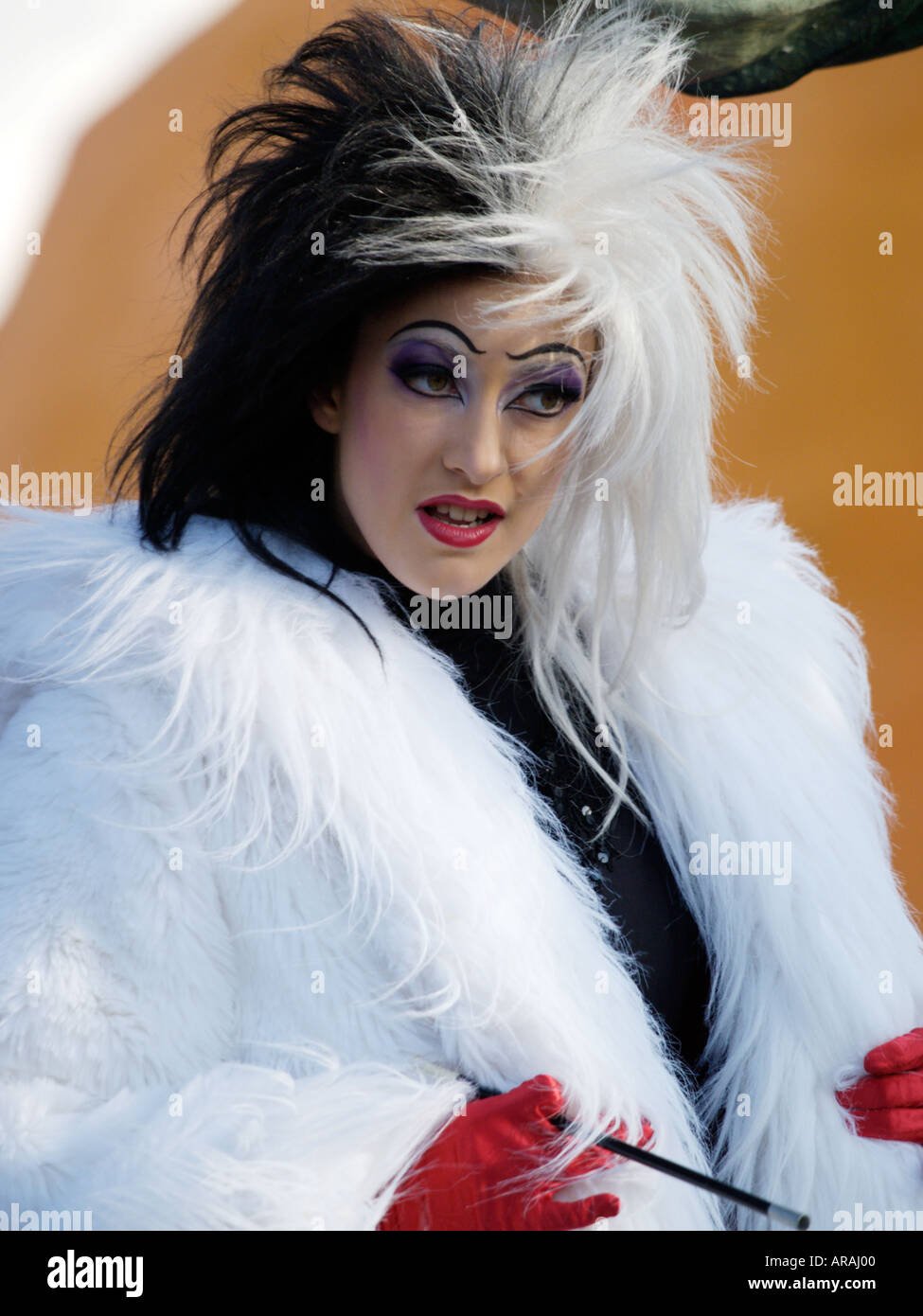
Cruella De Vil's Origins and Evolution as a Villain
From the moment she screeched onto the page in a puff of cigarette smoke and furious ambition, Cruella De Vil has embodied a singular brand of stylish villainy. More than just a character, she's a cultural phenomenon, her name synonymous with lavish cruelty and an insatiable desire for the perfect fur coat. This journey into Cruella De Vil: Origin and Character Evolution will peel back the layers of a villain who has transcended her literary beginnings to become one of fiction's most iconic antagonists, tracing her transformation from a debt-ridden heiress to a punk-rock anti-hero.
At a Glance: The Ever-Changing Face of Cruella De Vil
- Literary Roots: Created by Dodie Smith in 1956, Cruella first appeared as a wealthy, fashion-obsessed heiress driven by an extreme desire for a Dalmatian fur coat.
- Disney's Animation: The 1961 film solidified her visual and vocal identity, turning her into a manic, unforgettable cartoon villain without a husband or cat.
- Live-Action Powerhouse: Glenn Close's iconic portrayal in the 1996 and 2000 films brought Cruella to life with unmatched theatricality and elaborate costumes.
- Prequel Paradox: The 2021 film Cruella reimagined her as Estella Miller, an orphan turned fashion rebel, offering a sympathetic, anti-hero origin story.
- Adaptable Evil: Across TV shows, books, and games, Cruella consistently represents themes of obsession, greed, style, and animal cruelty, yet her motivations and methods often shift to suit the narrative.
- Enduring Icon: Her distinctive black-and-white aesthetic and over-the-top personality ensure her lasting legacy as a quintessential antagonist.
The Genesis of Greed: Dodie Smith's Original Vision
Before the animated screeches and the live-action snarls, Cruella De Vil first breathed life within the pages of Dodie Smith's 1956 novel, The Hundred and One Dalmatians. Here, Smith laid the groundwork for a character whose name itself — a chilling pun on "cruel" and "devil" — perfectly captured her essence.
In the novel, Cruella is introduced as a pampered, wealthy London heiress and a fashion designer, though curiously, she's also heavily in debt. She’s portrayed as the last descendant of a notorious family, suggesting a lineage steeped in unsavory reputation. Her childhood offers hints of her dark nature: one black and one white plait, and a memorable expulsion from school for drinking ink. This early duality and rebellious streak foreshadow the iconic look and defiance she would later embody.
Cruella's personal life in the novel adds further nuance. She's married to a meek furrier, a man so under her thumb that she forced him to adopt her surname. Notably, they have no children, perhaps highlighting her self-centered nature and lack of maternal instinct, which would become a key contrast in later adaptations where she often targets "families" of puppies.
Her penchant for the dramatic is evident in her possessions. She drives a black-and-white striped Daimler Empress Mark III DF 308 limousine, a vehicle she proudly boasts has "the loudest horn in London." Her English country house, aptly nicknamed 'Hell Hall,' is a monument to garish luxury, furnished with green, red, and black marble, and kept at an unbearably hot temperature. Adding to her eccentric household, she owns an abused white Persian cat, a subtle but potent detail that immediately establishes her cruel disposition towards animals even before the Dalmatians enter the picture.
Cruella's core motivation in the novel is chillingly simple: she desires to make a fur coat from the skins of Dalmatian puppies. When Mrs. Dearly's fifteen newborn puppies arrive, Cruella attempts to buy them, even offering to drown them herself due to their initially spotless coats—a truly horrifying proposition. Upon refusal, her next step is to hire the notorious Badun brothers to steal them, along with eighty-four other Dalmatian puppies she had legally acquired from other sources, consolidating her morbid collection.
The narrative culminates in the puppies' daring escape, aided by the resourceful Dalmatians Pongo and Perdita and other animal allies. Cruella's obsession leads to her downfall; her husband's entire fur stock is destroyed by the escaping dogs and even her own cat, a poetic justice. Overwhelmed by debt and public outrage, the de Vils flee England, and Cruella's signature black-and-white hair is said to turn white and off-greenish from shock, a physical manifestation of her utter defeat.
Interestingly, Dodie Smith revisited Cruella in her 1967 sequel, The Starlight Barking. Here, Cruella and her husband return to England, having seemingly turned a new leaf. She starts a metallic plastics business, replacing all her belongings with metallic plastic versions. While she retains her obsession with heat and pepper, her fur obsession is gone, and she is no longer a threat to animals. This brief redemption arc in the literary world offers a contrasting view to her almost universally villainous portrayal in adaptations.
Disney's Iconic Transformation: From Page to Screen
The world truly met Cruella De Vil with a bang—or perhaps a cackle—in Disney's 1961 animated classic, One Hundred and One Dalmatians. This adaptation, while faithful in spirit, amplified her villainy and refined her image, cementing her as one of Disney's most memorable antagonists.
Voiced by the incomparable Betty Lou Gerson and masterfully animated by Marc Davis, Disney's Cruella took on a life of her own. Davis, drawing inspiration from the flamboyant personality of actress Tallulah Bankhead and the physical design of Mary Wickes, transformed Smith's detached heiress into a character consumed by "crazed mania." This shift from cool, calculated evil to unhinged obsession was pivotal, making her both terrifying and darkly humorous.
Several key elements from the novel were omitted or altered for the animated film. Cruella's meek husband and her abused Persian cat were cut, streamlining her character to be a singular force of evil, entirely self-driven. Her distinctive vehicle was re-envisioned as a sleek, menacing red and black car, resembling a Mercedes-Benz 500K Cabriolet, instantly recognizable and as much a part of her persona as her fur coat. The film's Cruella quickly achieved iconic status, even being ranked by Forbes in 2002 as the 13th wealthiest fictional character and by the American Film Institute as the 39th greatest villain in cinematic history.
In the animated narrative, Cruella wastes no time mocking the Radcliffes, Roger and Anita, immediately demanding their fifteen newborn puppies. When Roger adamantly refuses to sell them, she doesn't hesitate, hiring the bumbling but menacing Jasper and Horace Badun to steal the puppies directly. The film's climax features an unforgettable, adrenaline-fueled car chase as Cruella furiously pursues the escaped Dalmatians in her signature vehicle, only to meet a satisfyingly karmic end by crashing into her henchmen's truck, leaving her defeated and humiliated. This animated masterpiece effectively introduced Cruella to a global audience, embedding her striking silhouette and maniacal laugh into the collective consciousness. For those who want to dive deeper into all things Cruella, explore Your complete guide to Cruella, covering every facet of her formidable presence.
Cruella in Live-Action: Glenn Close's Grandeur and Emma Stone's Genesis
The magnetic allure of Cruella De Vil proved too powerful to be confined to animation. In the 1990s, she made a spectacular leap into live-action cinema, first as a theatrical villain of unparalleled style, and later as the sympathetic focus of her own origin story.
The Live-Action Era (1996, 2000): Glenn Close Embodies Pure Evil
When 101 Dalmatians hit theaters in 1996, it was Glenn Close's electrifying portrayal of Cruella that stole the show. Close didn't just play Cruella; she became her, delivering a performance that was both terrifying and mesmerizing. In this adaptation, Cruella is reimagined as a vindictive magnate of a haute couture fashion house, "House of De Vil." Her motivation remains consistent: a desire for puppy fur, but with a specific, twisted rationale—it's softer when young. Close's Cruella is less subtly cruel and more overtly menacing, a force of nature driven by vanity and an unquenchable thirst for the latest, most exotic fur. Her plans are thwarted by the resourceful Dalmatians and their human companions, leading to her arrest and imprisonment.
Close's performance, alongside the breathtaking costumes designed by Anthony Powell and Rosemary Burrows, garnered widespread acclaim. These outfits were not merely clothes; they were extensions of Cruella's villainy, featuring terrifying details like claws on gloves, necklaces made of teeth, nail-heeled boots, and a constant, menacing cloud of cigarette smoke. This iteration of Cruella was a grand, theatrical spectacle, defining her visually for a new generation.
The 2000 sequel, 102 Dalmatians, attempted a unique twist on the character. Initially, Cruella appears "cured" of her fur addiction through hypnotherapy, rebranding herself as "Ella" and even becoming devoted to animals. This brief period of pseudo-redemption is short-lived; the iconic chimes of Big Ben tragically undo the effects of her therapy, plunging her back into her old, wicked self. This time, she recruits the equally nefarious French furrier Jean Pierre Le Pelt, aiming to steal 102 puppies for her ultimate coat. Her downfall is suitably over-the-top: she's ultimately trapped in a giant cake, arrested, and sentenced to life in prison. In a satisfying turn, her former henchmen, Jasper and Horace, renounce her and finally go legitimate.
Cruella (2021): Unveiling Estella's Origin Story
The 2021 prequel, Cruella, starring Emma Stone, dared to delve into the very origins of this iconic villain, transforming her from a straightforward antagonist into a complex, even sympathetic, anti-hero. The film introduces us to Estella Miller, a creative but troubled young girl with distinctive black-and-white hair she tries to hide. Her childhood is marked by tragedy: her mother, Catherine, is killed by Dalmatians owned by the formidable Baroness von Hellman, leaving Estella to flee to London, where she falls in with two street urchins, Horace and Jasper.
As an adult, Estella carves out a niche for herself in the fashion world, eventually landing a coveted job with the tyrannical Baroness. It's during her time working for her ruthless boss that Estella uncovers a shocking truth: the Baroness is her biological mother, who attempted to have her killed at birth. This revelation fuels Estella's transformation. She embraces her true identity, creating the flamboyant and rebellious "Cruella" persona.
This new Cruella, with her vibrant punk aesthetic and audacious fashion stunts, launches a spectacular campaign against the Baroness, using her flair for design and public spectacle to undermine her cruel mother. The climax sees Estella fake her own death, orchestrating the Baroness's arrest, and ultimately inheriting her vast fortune and her grand estate, Hellman Hall, which she renames Hell Hall – a subtle nod to her literary origins. The film concludes with a post-credits scene that cleverly sets up the classic narrative, showing Anita Darling and Roger Dearly each receiving a Dalmatian puppy, Pongo and Perdita, gifted by Cruella herself. This prequel brilliantly reframes Cruella, offering a compelling narrative that explores the trauma and ambition that forged one of fiction's most notorious figures.
Beyond the Big Screen: Cruella's Diverse Manifestations
Cruella De Vil���s influence extends far beyond the major cinematic adaptations, permeating animated series, stage productions, video games, and novels. Each iteration adds a new facet to her complex character, proving her adaptability across various mediums.
Animated Series (1997-1998): Corporate Schemes and Childhood Scars
The 101 Dalmatians animated series, which aired from 1997 to 1998, gave Cruella a fresh, corporate villain identity. Voiced primarily by April Winchell and occasionally Tress MacNeille, this Cruella was less focused on puppies for fur and more on various schemes, particularly trying to steal the Dearlys' farm. The series also offered a glimpse into her past, revealing a poignant, if dark, origin for her mania: she snapped after her wealthy parents sent her cardboard cutouts instead of the dream puppy she desired for Christmas. This backstory added a layer of psychological depth, suggesting her villainy might stem from profound childhood disappointment and neglect.
Sequel Animated Film: 101 Dalmatians II: Patch's London Adventure (2003)
In the direct-to-video sequel, 101 Dalmatians II: Patch's London Adventure, Cruella (voiced by Susanne Blakeslee) is depicted as being on probation after the events of the first film. She attempts to cure her obsession by seeking the help of a modern artist, using spots as her artistic inspiration. However, her attempts at reform are futile. She quickly regresses, going completely insane in her pursuit of the Dalmatians, culminating in another frantic chase. This time, her ultimate fate is imprisonment in an insane asylum, a fitting conclusion to her escalating madness.
Modern Day: 101 Dalmatian Street (2018-2020)
The animated series 101 Dalmatian Street, set 60 years after the original film, features a much older Cruella, voiced by Michelle Gomez. Now in her late 80s or early 90s, she uses special sprays and treatments to hide the effects of aging, maintaining her iconic look. Her motivation remains the same: she plans to kill the descendants of Pongo and Perdita to finally achieve her dream coat. However, a significant twist involves her great-nephew, Hunter de Vil, who ultimately turns against her, choosing loyalty to the Dalmatians over his villainous great-aunt, highlighting the theme of new generations forging their own paths.
Once Upon a Time: Magical Wickedness and Tragic Flaws
The ABC fantasy series Once Upon a Time offered a particularly creative and dark interpretation of Cruella, portrayed by Victoria Smurfit (and Milli Wilkinson as a child). In this universe, Cruella is a childhood sociopath witch, born with the power to control animals. This power is later amplified by the magical ink of the Author, allowing her to command creatures with words alone. Her backstory reveals she used these powers to kill her mother's Dalmatians, not for a coat, but out of sheer malice and a desire for control. A later magical ink spill rendered her hair permanently black-and-white and, ironically, cursed her so she could never take another life. Her story ends tragically, falling off a cliff after confronting Emma Swan, only to reappear in the Underworld, where she schemes with Hades and James (Prince Charming's twin brother), proving that even death can't fully contain her wickedness.
Descendants (2015): The Neglectful Mother
In the Disney Channel Original Movie Descendants, Cruella (portrayed by Wendy Raquel Robinson) appears as one of the infamous villains exiled to the Isle of the Lost. Here, her cruelty takes on a different form: she is a neglectful and abusive mother to her son, Carlos, treating him as a mere servant. This portrayal explores the intergenerational impact of villainy, showing how her selfish and cruel nature directly affects her own offspring.
Video Games, Books, Musicals, and Parks
Cruella's ubiquitous presence extends to numerous other media. She is the main antagonist in video games like 101 Dalmatians: Escape from DeVil Manor (1997) and 102 Dalmatians: Puppies to the Rescue (2000). She appears in popular book series such as Ridley Pearson's Kingdom Keepers, and is the subject of Serena Valentino's 'Villains' series and Vera Strange's 'Disney Chills' series, further exploring her psychology. On stage, she has been portrayed by talented actresses like Patricia Hodge in a 1996 BBC audio drama, and Rachel York, Sara Gettelfinger, and Kate Fleetwood in various stage musicals. Finally, in Disney Parks and Resorts worldwide, Cruella De Vil remains a highly popular meet-and-greet character, often appearing in parades and shows, solidifying her status as a global icon of villainy.
The Enduring Allure: Why Cruella Captivates Us
Why does Cruella De Vil continue to captivate audiences across generations and countless adaptations? Her longevity speaks to a potent blend of archetypal villainy, compelling aesthetic, and surprising adaptability.
At her core, Cruella is a vivid personification of several universal themes: obsession, style, greed, vanity, evil, and most notably, cruelty to animals. She taps into primal fears of unchecked desire and the corruption of wealth. Her name itself, "Cruel" and "Devil," is a brilliant shorthand for her character, with her English country home, 'Hell Hall,' serving as a physical extension of her persona. Even the apocryphal inspiration for her name from Dodie Smith's own Rolls-Royce "Sedanca de Ville" adds a touch of real-world glamour to her sinister origins.
Her psychological depth, or lack thereof, has evolved significantly. In the original novel, her motivations are fairly straightforward: a pampered heiress demanding what she wants, willing to destroy lives for a fur coat. The animated Disney version leans into a "crazed mania," making her more cartoonishly evil but no less terrifying. The live-action films with Glenn Close embraced her as a grand, theatrical villain, celebrating her over-the-top evil. However, the 2021 Cruella film introduced a radical shift, exploring a traumatic past that shaped Estella Miller into the persona of Cruella, providing a more sympathetic and complex origin rooted in betrayal and the desire for justice (albeit a twisted one). This evolution from simple greed to complex trauma allows her character to resonate with modern audiences who appreciate nuanced villains.
Beyond her actions, Cruella is an undeniable style icon. Her distinctive black-and-white hair, whether a childhood trait, a result of shock, or a deliberate punk statement, is instantly recognizable. Her fashion sense, from her lavish fur coats in earlier iterations to her audacious, rebellious punk aesthetic in the prequel, always commands attention. She represents a dangerous kind of glamour, the allure of the forbidden, making her visually arresting and unforgettable.
The evolution of her character across adaptations showcases her enduring power. She can be a straightforward villain driven by avarice, a cartoonish force of nature, a high-fashion magnate, a magical sociopath, or even a misunderstood anti-hero. Each new interpretation keeps her relevant, reflecting changing cultural attitudes towards villainy and character development.
Debunking Misconceptions and Answering FAQs
Cruella's long and varied history means there are often questions and misconceptions surrounding her character. Let's clarify some common points.
Is Cruella pure evil or misunderstood?
This heavily depends on the adaptation. In Dodie Smith's novel and Disney's animated film, she is largely depicted as purely evil, driven by selfish desires and cruelty. Glenn Close's portrayal leans into theatrical, unrepentant villainy. However, the 2021 prequel Cruella radically shifts this, presenting Estella Miller's transformation into Cruella as a response to severe trauma and betrayal, positioning her as more of a chaotic anti-hero seeking revenge and agency. Similarly, the 101 Dalmatians animated series offered a childhood trauma backstory.
What's the significance of her black-and-white hair?
Her iconic hair has multiple origins. In the original novel, she had one black and one white plait as a child, and her hair later turns white and off-greenish from shock. Disney's animated version simply established it as her natural, striking look. In the Once Upon a Time series, it was a magical consequence of an ink spill. The Cruella prequel grounds it in her natural biology, a distinct look she initially tries to hide, but later embraces as part of her "Cruella" persona, symbolizing her dual nature. Regardless of origin, it's a powerful visual metaphor for her duality and extreme personality.
Does Cruella always want to kill puppies?
While her most famous motivation is indeed to make a fur coat from Dalmatian puppies, not all adaptations focus solely on this. In Dodie Smith's sequel, The Starlight Barking, she loses her fur obsession entirely. The Cruella prequel shows Estella (Cruella) not wanting to harm puppies, even caring for her own Dalmatians, and even gifting Pongo and Perdita to Roger and Anita. In the 101 Dalmatians animated series, her schemes often revolve around corporate takeovers rather than exclusively puppy-napping. However, in the vast majority of adaptations, including the animated film, live-action movies (1996, 2000), and 101 Dalmatian Street, the desire for a Dalmatian fur coat remains her driving, sinister force.
Was Cruella always a fashion designer?
Yes, from her very first appearance in Dodie Smith's 1956 novel, Cruella is established as a fashion designer. This aspect of her character is consistently maintained across most major adaptations, including the 1996 live-action film where she heads her own haute couture house, "House of De Vil," and the Cruella prequel, which deeply integrates her passion for fashion as central to her identity and rise. Her design talent often fuels her villainy, making her pursuit of rare furs an extension of her artistic (and twisted) vision.
What Cruella's Legacy Teaches Us
Cruella De Vil, in all her glorious, terrifying, and sometimes tragic forms, offers a masterclass in character evolution. From Dodie Smith's debt-ridden heiress to Disney's frenzied villain, Glenn Close's high-fashion dominatrix, and Emma Stone's punk-rock anti-hero, her story reflects the changing ways we consume and create narratives. She's a testament to the power of a compelling character concept, one that can be reinterpreted, reimagined, and recontextualized without losing its essential wicked spark.
Her journey shows us that iconic villains aren't static; they adapt, they reflect their times, and sometimes, they even make us question our definitions of good and evil. Whether you see her as an embodiment of pure, unadulterated villainy or as a product of circumstance and trauma, Cruella De Vil remains an unforgettable presence in the tapestry of popular culture. She reminds us that the most fascinating characters often dwell in the darkest corners of the human (or inhuman) psyche, captivating us with their unapologetic pursuit of their desires, no matter how cruel.