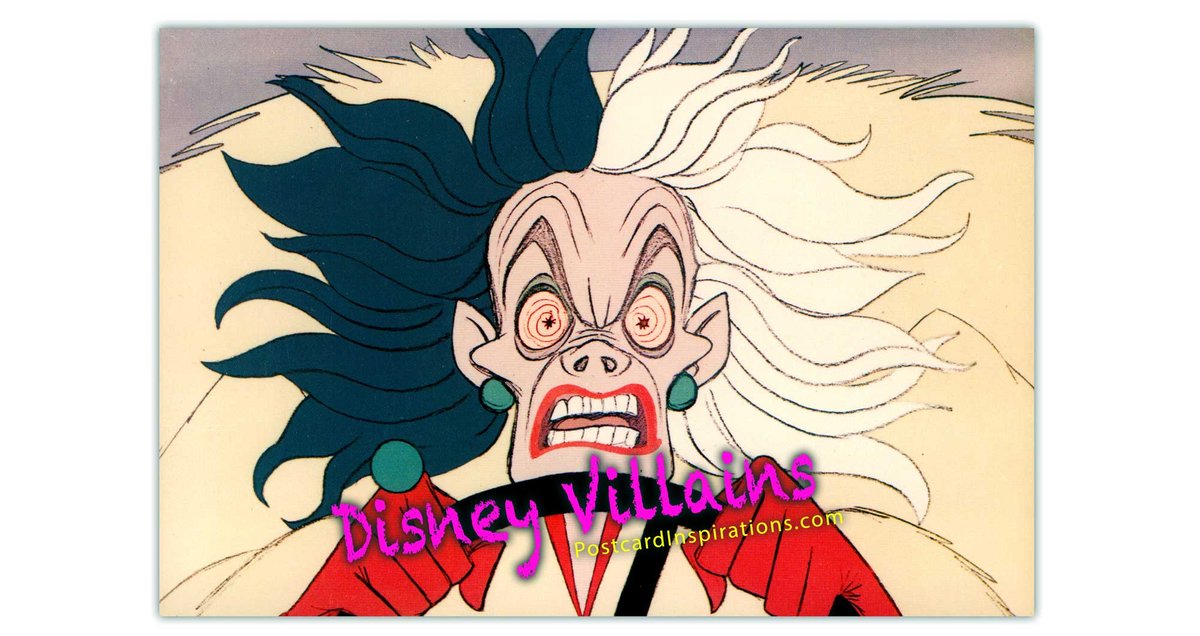
Cruella De Vil: The very name conjures images of a flamboyant, fur-obsessed fashionista, a terrifying figure who once haunted the nightmares of countless children. Yet, the conversation around her has drastically shifted. We're now Exploring Cruella De Vil's Legacy Among Disney Villains not just as a one-dimensional antagonist, but as a complex, often sympathetic, anti-hero.
This isn't about excusing her puppy-napping tendencies, of course. But recent explorations of her character have compelled us to look beyond the black-and-white (both literally and figuratively) and delve into the gray areas of motivation, ambition, and the very definition of villainy itself. What makes a character truly evil, and what makes them merely a product of circumstance, pushed to extremes? Cruella de Vil's evolution across decades of storytelling offers a fascinating case study in how our understanding of "bad guys" — and the stories we tell about them — has changed.
At a Glance: Deconstructing Cruella's Complex Legacy
- The Original Menace: In 101 Dalmatians, Cruella is a pure, unadulterated villain driven by vanity and a cruel obsession with fur.
- A Nuanced Origin: The 2021 live-action film, Cruella, reimagines her origins, presenting Estella as a gifted, rebellious outsider shaped by loss and societal rejection.
- The Anti-Hero Lens: This new narrative positions Cruella less as inherently evil and more as a defiant, resourceful individual battling a corrupt establishment (the Baroness).
- Blurred Lines: Her actions, while often ruthless, are frequently framed as a response to injustice, making her motivations more relatable, if not always justifiable.
- Fashion as Rebellion: Her iconic style transcends mere vanity; it becomes a powerful tool of self-expression, defiance, and strategic psychological warfare.
- Enduring Icon: Regardless of interpretation, Cruella remains one of Disney's most visually striking and culturally significant characters, symbolizing both extravagant villainy and fierce individuality.
The Original Sin: Cruella as Pure Villainy in 101 Dalmatians
For decades, the name Cruella De Vil was synonymous with cartoonish, yet utterly terrifying, evil. When we first met Cruella de Vil from 101 Dalmatians, she was an almost spectral figure, gaunt and angular, with her iconic half-black, half-white hair, an unsettling laugh, and a penchant for puffing green smoke. Her motive was simple, primal, and horrifying: to skin adorable puppies for a fur coat. There was no deep backstory, no tragic past to explain her depravity. She was just bad, and she reveled in it.
This portrayal served its purpose perfectly within the context of the 1961 animated classic. She was the clear antagonist, a force of chaos and greed against the wholesome innocence of the Dalmatians and their owners. Her character was designed to evoke fear and outrage, making the protagonists' struggle all the more compelling. She was, in essence, pure id: selfish, impulsive, and utterly lacking in empathy. Her singular obsession with fur, to the point of dognapping, left no room for moral ambiguity. She was the villain, plain and simple, and her legacy was one of cartoon evil personified.
Enter Estella: The Origin Story of a Rebel Spirit
However, the 2021 live-action film Cruella threw a stylish wrench into this established narrative. It dared to ask: what if there's more to Cruella than meets the eye? What if her villainy wasn't born, but made? The movie introduces us to Estella, a precocious, creative, and rebellious young girl with a flair for fashion and a natural inclination to challenge authority. From her earliest days, Estella is an outsider, struggling to fit into a world that doesn't understand or appreciate her unique vision.
Her formative years are marked by tragedy, poverty, and betrayal. Orphaned and forced to survive on the streets of London, Estella hones her skills as a con artist and a designer, all while clinging to a fragile hope for a better life. The film masterfully lays the groundwork for her eventual transformation, portraying her not as inherently evil, but as a resourceful, ambitious young woman navigating a cutthroat society. This initial glimpse into her life reframes her future actions, suggesting that her path to "villainy" is less about innate cruelty and more about a desperate struggle for survival and recognition.
From Estella to Cruella: A Transformation Forged in Fire
The metamorphosis from Estella to Cruella isn't a sudden flip of a switch; it's a gradual, painful unmasking, driven by sorrow, loss, and a desperate need for acceptance and revenge. The Indigo Music source aptly notes, "Her transition into ‘Cruella’ is driven by sorrow, loss, and a need for acceptance in a society that consistently rejects her rather than outright villainy." This transition is catalyzed by a series of traumatic events, particularly her entanglement with the Baroness, a ruthless, egomaniacal fashion mogul who embodies the very worst aspects of the world Estella is trying to conquer.
The film paints a vivid picture of Estella's identity crisis. She tries to be "good," to conform, but her true, untamed self — Cruella — constantly threatens to burst forth. Each perceived slight, each act of betrayal, each moment of being underestimated or exploited by the Baroness chips away at Estella's facade, fueling Cruella's rise. When the full extent of the Baroness's cruelty and deceit is revealed, Estella embraces Cruella not as an alter ego of evil, but as a necessary, powerful persona. It's a defiant act, a strategic choice to weaponize her pain and channel it into a formidable force for disruption and self-preservation.
The Anti-Hero Archetype: What Makes Cruella Different?
The 2021 film undeniably casts Cruella in the mold of an anti-hero. An anti-hero, unlike a traditional villain, often lacks conventional heroic qualities such as altruism, courage, or morality, but acts for a "good" (or at least understandable) cause, or achieves heroic ends through morally questionable means. Cruella's journey fits this definition almost perfectly.
Her motivations, while self-serving, are deeply rooted in a desire for justice and recognition, rather than pure malice. She wants to dominate the fashion world, yes, but also to dismantle the oppressive power structure represented by the Baroness. Her cunning, ambition, and willingness to bend (or outright break) rules are characteristics often associated with anti-heroes who operate outside societal norms. Think of figures like Batman, whose methods are often dark and vigilante-like, or even characters like Loki, who frequently blurs the line between hero and villain based on his own complex agenda. Cruella, in this context, becomes a figure of rebellion, a visionary artist who uses audacious, theatrical acts to expose hypocrisy and claim her rightful place. She's fighting for herself, yes, but in doing so, she's also challenging a corrupt system.
Cruella's Ethical Tightrope: Where Does She Stand?
Even as an anti-hero, Cruella walks a fine ethical line. Her actions, particularly in her theatrical "revenge" against the Baroness, often involve manipulation, public humiliation, and calculated cruelty. She's not above psychological warfare, grand larceny, or even setting things ablaze to make a point. These aren't the actions of a conventional hero, and they certainly don't portray her as a beacon of moral rectitude.
However, the film consistently frames her ruthlessness as a reactive force. She becomes fierce because the world around her is equally, if not more, brutal. Her cunning is a shield against the Baroness's venom. Her extravagant acts of defiance are a necessary spectacle to be seen and heard in a world that tried to silence her. This portrayal invites viewers to ponder whether her "villainy" is justified given the circumstances she faces. Is she evil, or merely a reflection of the darkness she’s fighting against? The film intentionally leaves this question hanging, making her a captivating figure whose morality is perpetually in flux, depending on the viewer's perspective and their understanding of her deeply scarred past.
Challenging Disney's Moral Landscape
Disney, historically, has presented a clear dichotomy between good and evil. Its villains were often archetypal, embodying specific vices: Maleficent's wrath, Ursula's deceit, Scar's envy. These characters served as stark contrasts to the pure-hearted heroes and heroines. Cruella, in her 2021 incarnation, fundamentally challenges this long-standing narrative tradition.
By giving a previously unambiguous villain a sympathetic origin story and complex motivations, Disney pushes the boundaries of its own storytelling. It asks its audience to empathize with a character who, in another context, would be unequivocally evil. This move reflects a broader trend in modern storytelling, where audiences increasingly crave nuanced characters who grapple with internal conflicts and operate in morally gray areas. It suggests that even within the traditionally black-and-white world of Disney, there's room for exploration of the human (or inhuman) condition in all its messy complexity. This approach not only makes the characters more interesting but also encourages a more critical, empathetic engagement from the audience.
Cruella vs. The Baroness: A Clash of Ambition
A significant factor in Cruella's portrayal as an anti-hero in the 2021 film is the presence of the Baroness. The Baroness isn't just an antagonist; she's a truly despicable character, devoid of empathy, utterly self-absorbed, and casually cruel. She is the villain without nuance, a master manipulator who cares only for her own glory. By pitting Cruella against such an unequivocally detestable force, the film cleverly recontextualizes Cruella's own actions.
Cruella's battle against the Baroness becomes a proxy for a rebellion against an unfair system, against exploitation, and against a lack of artistic recognition. Her elaborate schemes, her theatrical stunts, and even her more ruthless tactics, gain a degree of justification when aimed at bringing down someone as truly malicious as the Baroness. As the Indigo Music piece highlights, "Cruella's revolt becomes more legitimate and even heroic at times because she competes with the Baroness, a cunning and callous fashion designer." This dynamic shifts the audience's allegiance, making us root for Cruella, not necessarily because her methods are always right, but because her adversary is demonstrably worse. It's a classic case of the "enemy of my enemy" principle, transforming Cruella into a flawed champion against a greater evil.
The Enduring Appeal: Why We're Still Talking About Her
Beyond her moral complexities, Cruella's enduring appeal lies in several key factors:
- Iconic Style: Her fashion sense is unparalleled among Disney villains. Bold, extravagant, and often avant-garde, her outfits are an extension of her personality – a declaration of defiance and an artistic statement. Even in the original animation, her silhouette and color palette were unforgettable. The 2021 film takes this to another level, making her fashion central to her character arc and her weapon of choice.
- Unapologetic Ambition: Whether as a pure villain or an anti-hero, Cruella is driven by an intense, unyielding ambition. She wants what she wants, and she'll stop at nothing to get it. This fierce determination, while sometimes leading to dark places, is also a quality that resonates with many, particularly in an era that celebrates female empowerment and breaking barriers.
- Charismatic Presence: Regardless of her moral compass, Cruella possesses an undeniable charisma. She commands attention, whether through her booming laugh, her dramatic entrances, or her clever banter. Emma Stone's portrayal in Cruella amplifies this, imbuing her with a compelling blend of vulnerability, wit, and theatrical flair. She's a character you can't take your eyes off, even when her actions are questionable.
These elements combine to create a character that transcends simple villainy, evolving into a cultural icon who embodies a powerful, albeit often chaotic, form of individuality and artistic expression.
Beyond Villains: Cruella's Cultural Impact
Cruella's legacy extends far beyond her role in the 101 Dalmatians universe. She has become a symbol, particularly in the realm of fashion and rebellion. Her distinct visual identity has inspired countless designers, artists, and Halloween costumes. She represents a certain unapologetic maximalism, a rejection of subtlety in favor of audacious self-expression.
In a broader sense, Cruella now stands as a testament to the power of reimagining established characters. Her story, as told in the 2021 film, highlights how narrative perspective can completely alter our perception of good and evil. She's no longer just a figure to fear; she's a figure to analyze, to debate, and perhaps even to understand. This depth allows her to resonate with adult audiences in a way that many classic Disney villains, with their more straightforward motives, simply cannot. She challenges the audience to think critically about morality, intent, and the circumstances that shape a person's character, making her a more relevant and thought-provoking figure in contemporary culture.
The Takeaway: What Cruella Teaches Us About Storytelling
The evolution of Cruella De Vil, from a one-note villain to a complex anti-hero, offers invaluable lessons for both storytellers and audiences alike. It reminds us that:
- Nuance is King: Simplistic black-and-white morality often falls short in engaging modern audiences. Characters with complex motivations, internal conflicts, and a blend of virtues and vices are often the most memorable and impactful.
- Perspective Matters: The way a story is told – whose perspective we follow, what details are highlighted – fundamentally shapes our understanding and empathy for its characters. A villain in one narrative can become a hero in another, simply by shifting the lens.
- Origins Inform Destiny: Exploring the "why" behind a character's actions, delving into their past and the forces that shaped them, can transform a caricature into a compelling, three-dimensional figure.
- Villains Can Be Visionaries: Sometimes, the lines blur so much that a character initially perceived as evil can also be seen as a visionary, a defiant force pushing against societal norms. As the Indigo Music piece concludes, Cruella is "a reminder that, depending on the storyteller, it can occasionally be difficult to distinguish between a villain and a visionary."
Ultimately, Cruella De Vil's legacy is far from settled. She remains a dynamic character, a canvas upon which new interpretations can be painted. Her journey encourages us to look deeper, to question assumptions, and to appreciate the rich, complicated tapestry of human nature – even when it's cloaked in a fabulous, fur-lined coat. She is a testament to the enduring power of a well-crafted character, capable of evolving with the times and sparking endless discussion about the very nature of good and evil.