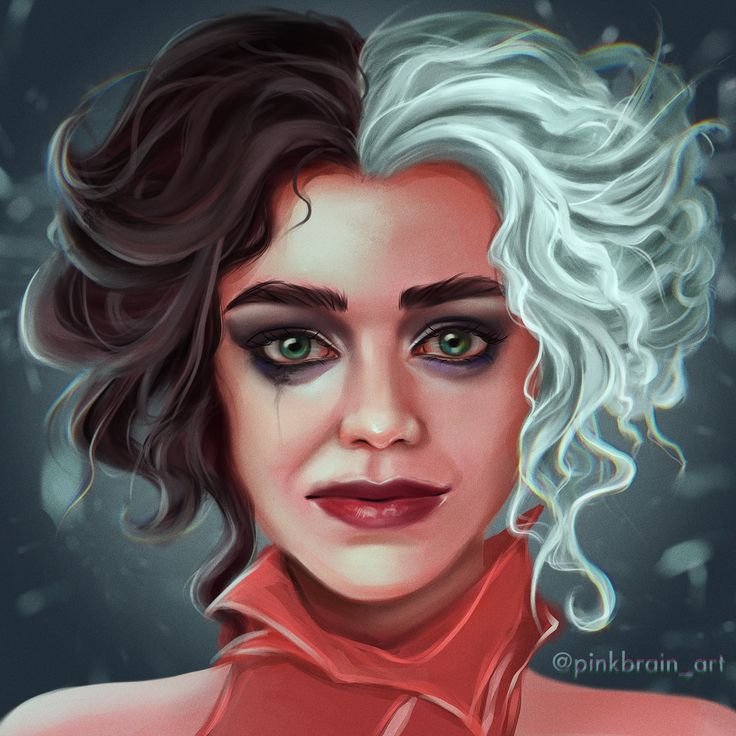
The enigmatic allure of a captivating antagonist often sparks the most fervent debates and creative ponderings among fans. Few characters embody this truth quite like Cruella De Vil, whose journey from a dog-napping villainess to a nuanced anti-heroine has fueled countless Fan Theories and Interpretations of Cruella De Vil's Backstory. From her inherent wickedness to the traumatic events that forged her distinctive persona, enthusiasts delight in dissecting every facet of her complex narrative.
At a Glance: Unpacking Cruella's Backstory Theories
- Two Cruellas: Recognize the distinct interpretations of Cruella across adaptations, particularly the stark contrast between the classic villain and the Cruella (2021) anti-heroine.
- Nature vs. Nurture: Explore the central debate: Is her villainy innate, or a product of her traumatic upbringing and desire for revenge?
- The Baroness's Shadow: Understand how the 2021 film positions the Baroness as the true catalyst for Cruella's darker transformation.
- The Fashion as Identity: Interpret Cruella's extravagant fashion as more than just clothing—it's armor, a statement, and a tool for psychological warfare.
- Continuity Conundrums: Grapple with how the Cruella (2021) film fits (or doesn't fit) into the broader 101 Dalmatians universe, especially regarding the infamous puppy plot.
- Sympathetic Villainy: Consider why modern adaptations often seek to humanize villains and how this impacts audience perception.
Cruella's Shifting Canvas: A Brief History of a Wicked Icon
Cruella De Vil has always been a character draped in extremes. Originating in Dodie Smith's 1956 novel The Hundred and One Dalmatians, she was immediately recognizable: a skeletal figure, two-toned hair, and a singular, terrifying obsession with fur coats, especially those made from Dalmatian puppies. She was the personification of unadulterated evil, a caricature of high-society decadence and cruelty.
Over the decades, cinematic adaptations amplified her iconic status. Glenn Close's portrayal in the 1996 live-action 101 Dalmatians and its 2000 sequel, 102 Dalmatians, brought a theatrical, menacing energy to the character, leaning into her larger-than-life villainy with gusto. Her exaggerated expressions and elaborate schemes cemented her as a formidable, albeit deliciously camp, antagonist. These versions left little room for sympathy; Cruella was simply bad, and revelled in it. For a broad overview of her journey, you might want to delve into All about Cruella De Vil.
Then came Cruella (2021), starring Emma Stone, which fundamentally re-imagined the character, transforming her from a pure villain into a complex anti-heroine. This film wasn't just a prequel; it was an origin story that asked "Why?" instead of simply "What?" It delved into Estella's tumultuous childhood, her struggle with a dual personality, and the catalysts that eventually propelled her into the persona of Cruella De Vil. This radical reinterpretation, drawing comparisons to films like Joker and Birds of Prey, provided a rich, fertile ground for the fan theories we'll explore.
The Cruella (2021) Backstory: A Breeding Ground for Theories
The 2021 film acts as the Rosetta Stone for many contemporary interpretations of Cruella. It presents Estella, an orphaned girl with a rebellious spirit and an innate talent for fashion, navigating the harsh streets of London with her adopted brothers, Horace and Jasper. It’s here, in her formative years, that the seeds of Cruella are sown, watered by ambition, grief, and a burning desire for retribution.
Estella's Duality: A Psychological Struggle
One of the most compelling aspects of the 2021 film is its portrayal of Estella's internal conflict. From a young age, she possesses a "darker side," a more audacious and manipulative alter ego she eventually names Cruella. This duality isn't just a plot device; it's a central theme, suggesting that Cruella isn't merely a character Estella becomes, but a part of her that was always present, perhaps even inherited.
Fans often interpret this as a coping mechanism—a persona developed to protect herself from a cruel world, much like a mask. The film shows Estella actively trying to suppress Cruella, only for her to emerge when circumstances demand it. This struggle sparks theories about identity formation, mental health, and the idea that our "darker" impulses can sometimes be our greatest strengths, especially in the face of adversity. This concept opens up avenues for a deeper psychological profile of Cruella De Vil.
The Baroness and the Genesis of Revenge
The pivotal reveal in Cruella (2021)—that the ruthless fashion mogul Baroness Von Hellman is Estella's birth mother and responsible for the death of her adoptive mother, Catherine—is the engine of the film's plot and the cornerstone of many fan theories. This transforms Cruella from a character with an unexplained evil streak into a protagonist driven by a profound personal vendetta.
The Baroness, a truly malicious and narcissistic figure, becomes the primary antagonist, pushing Estella to embrace her Cruella persona fully. Theories often focus on how this act of matricide (or attempted matricide, as Catherine wasn't her birth mother) fundamentally shifts Estella's moral compass. Is her subsequent villainy justified as a response to such profound trauma? Does the Baroness's cruelty simply awaken a dormant darkness in Estella, making Cruella an inevitable outcome? This complex relationship is key to understanding deeper dive into the 2021 film's narrative choices.
Horace and Jasper: The Unsung Companions
Horace and Jasper, typically depicted as bumbling henchmen, are recast in Cruella (2021) as Estella's loyal, albeit sometimes reluctant, childhood friends and partners in crime. They provide a grounding force for Estella, acting as her conscience and reminding her of her humanity even as she descends deeper into the Cruella persona.
Their unwavering loyalty to Estella, even when she begins to treat them poorly as Cruella, highlights the depth of their bond. Fan theories suggest that their presence is crucial in preventing Cruella from becoming entirely irredeemable. They represent the last vestiges of Estella's "goodness," constantly pulling her back from the brink of total villainy. Some argue that without them, Cruella would have become far more sinister, perhaps closer to the puppy-obsessed maniac of earlier portrayals.
Unpacking the Fan Theories: What Drives Cruella's Darkness?
The 2021 film's rich narrative has given rise to numerous interpretations, each attempting to explain the character's journey from a troubled girl to the iconic fashion rebel.
Nature vs. Nurture: Is Cruella Born or Made?
Perhaps the most enduring debate among fans revolves around the origin of Cruella's villainy. Was she born with a predisposition for darkness, or was she forged by the traumatic events of her life?
- Nature Argument: Proponents point to Estella's mischievous and rebellious tendencies from a very young age. Even before her mother's death, she struggled to control her "Cruella" impulses, suggesting an inherent wildness or even a touch of sociopathy. Her distinctive black and white hair, unique to her from birth, is often cited as a physical manifestation of this internal duality, a visual cue to her inherent "differentness."
- Nurture Argument: This perspective emphasizes the profound impact of her adoptive mother's death and the subsequent revelation of the Baroness's true identity. The film clearly portrays these events as the catalyst for Estella's full embrace of the Cruella persona. Her ambition, once a creative drive, becomes weaponized by revenge. It's the cruelty she experiences that turns her cruel, much like a damaged diamond forming under immense pressure.
Many theories suggest a blend of both: an innate spark of rebellion and ingenuity in Estella, ignited and twisted by the trauma and injustice she suffers. It's a classic villain origin story trope, where a character's "badness" is explained by a tragic past, making her actions, while extreme, somewhat understandable. This shift is part of the broader trend of villain origin stories in Disney's recent catalog.
The "Joker" Comparison: Societal Alienation and Anti-Heroism
When Cruella (2021) was released, comparisons to Todd Phillips' Joker (2019) were rife. Both films explore the transformation of a marginalized individual into an iconic villain, driven by societal neglect, personal trauma, and a descent into madness (or a radical embrace of their true self).
Fan theories drawing this parallel often focus on:
- Rebellion Against the Establishment: Just as Arthur Fleck rebels against Gotham's wealthy elite, Estella's Cruella wages war against the Baroness and the stifling, exploitative high fashion world she represents. Both characters become symbols of chaotic defiance.
- Embracing the Persona: For both Arthur and Estella, their villainous alter egos provide a sense of agency and power they previously lacked. Cruella's rise in the fashion world is her way of taking control, of being seen and feared, rather than dismissed.
- Moral Ambiguity: The films challenge audiences to empathize with characters who commit questionable acts. Fans theorize that Cruella's journey is a critique of the harsh realities faced by creative outsiders, where conforming means losing oneself, and rebellion means becoming an outcast, or worse, a "villain."
These interpretations highlight a growing fascination with understanding the why behind villainy, rather than simply demonizing it.
Sympathetic Villain? How Far Does Cruella Push Empathy?
A crucial element of the 2021 film is its attempt to humanize Cruella. She's not just evil; she's resourceful, brilliant, and, at times, genuinely hurt. This has led to widespread fan discussions about whether Cruella can truly be considered a sympathetic character.
- Arguments for Sympathy: Fans point to her traumatic childhood, her love for her adoptive mother, her loyalty to Horace and Jasper, and her legitimate creative genius. Her revenge against the Baroness, a truly monstrous figure, feels earned, making her actions understandable within the film's context.
- Arguments Against Sympathy (and for the Original Villain): Despite her sympathetic backstory, some fans argue that the seeds of her classic villainy are still present. Her increasing callousness towards Horace and Jasper, her manipulative tendencies, and her eventual embrace of the name "De Vil" (derived from the Baroness's estate, "Hellman Hall," which she renames "Hell Hall") hint at a darker future. The film ends with her firmly in charge, cold and calculated, suggesting that her initial motivations have morphed into pure ambition.
Many loyalists of the original character believe that trying to make Cruella sympathetic dilutes the power of her iconic villainy. They argue that some characters are simply meant to be pure evil, and giving them a tragic backstory undermines their fundamental nature. This difference in perception is a key part of how Cruella's character has evolved across adaptations.
Is It a Prequel (to What)? Addressing the Continuity Confusion
One of the most persistent questions among fans is how Cruella (2021) connects to previous adaptations, specifically the 1996 live-action 101 Dalmatians. The ground truth states it is not a prequel to that version, yet the film's ending deliberately plants seeds that hint at future events, causing considerable confusion.
- The Pongo and Perdita Stinger: The post-credits scene shows Cruella gifting a Dalmatian puppy, Pongo, to Roger Dearly and another, Perdita, to Anita Darling. In the original story, Pongo and Perdita are the parents of the 101 Dalmatians. This scene directly foreshadows the meeting of Roger and Anita and the eventual birth of their puppies.
- Interpretation 1 (Soft Reboot/New Timeline): Many fans believe this stinger confirms that Cruella (2021) is setting up its own live-action 101 Dalmatians universe, distinct from the Glenn Close films. The Roger and Anita characters in Cruella are clearly different from their 1996 counterparts (Roger is a musician, Anita a tabloid journalist). This means any future puppy-napping plot would occur within this new timeline, allowing Cruella's character arc to unfold without contradicting her previously established villainy.
- Interpretation 2 (A Different Kind of Cruella): A more nuanced theory suggests that this Cruella, having experienced betrayal and injustice, might not pursue the puppies for a fur coat in the same way. Perhaps her motives will be different—a twisted form of revenge, a power play, or even a challenge to her own sense of self. Could she be after the idea of Dalmatians, rather than their fur, to further antagonize Roger and Anita, whom she likely sees as part of the establishment now?
- The Missing Puppy-Napping Obsession: A significant point of contention is Cruella's lack of interest in Dalmatians for fur in the 2021 film. In fact, her "villainy" is primarily directed at the Baroness, and Dalmatians are associated with her trauma (the Baroness's dogs pushed her mother off a cliff). This leads to theories that her eventual obsession with Dalmatian fur would have to stem from a future, as-yet-unrevealed event. Perhaps a further betrayal involving Dalmatians, or a psychotic break, would be necessary to bridge the gap between this Cruella and the one who wants to skin puppies.
The Fashion Empire as a Statement: Power, Identity, and Defiance
Cruella's profound connection to fashion in the 2021 film is more than just a character trait; it's a driving force and a means of expression. Her designs are audacious, subversive, and undeniably brilliant.
- Fashion as Armor: Her elaborate gowns and avant-garde presentations are often interpreted as a form of armor, protecting Estella and allowing Cruella to project an image of untouchable power. Each outfit is a calculated move, a psychological weapon in her war against the Baroness.
- Fashion as Identity: For Estella, fashion is her true language. It's how she communicates her anger, her grief, her genius, and ultimately, her newfound identity as Cruella. The black and white motif, especially prominent in her designs, reflects her own duality and her rejection of conventional norms. This aspect makes her a fascinating figure for anyone studying Cruella's profound impact on fashion and costume design.
- Defiance and Disruption: Cruella's rise in the fashion world is a direct challenge to the old guard, personified by the Baroness. Her guerrilla fashion shows and dramatic unveilings are acts of rebellion, disrupting the stale hierarchy and demanding attention on her own terms. Fans see this as a statement on the fashion industry itself—its exclusivity, its ruthlessness, and the power of creative disruption.
Mental Health Interpretations: Untangling Cruella's Ambition and Obsession
While not explicitly stated, the film offers fertile ground for interpreting Cruella's behavior through a mental health lens. Her extreme ambition, her single-minded pursuit of revenge, and her struggle with a dual personality can be seen as manifestations of deeper psychological traits.
- Dissociative Identity Disorder (DID) or Persona: The most obvious interpretation is that Estella exhibits traits of DID, or at least a powerful, distinct persona (Cruella) that takes over. Fans theorize whether this is a genuine disorder or a deliberate, strategic creation. Her ability to "turn off" Cruella suggests it's more of a chosen identity, yet the struggle to control it in her youth hints at something deeper.
- Narcissistic Tendencies: Both the Baroness and, eventually, Cruella display narcissistic traits—a grandiose sense of self, a lack of empathy, a need for admiration, and a manipulative nature. For Cruella, this could be interpreted as a defense mechanism learned from her abusive mother, a way to survive and thrive in a cutthroat world.
- Obsessive-Compulsive Tendencies: While not clinical, Cruella's single-minded focus on revenge and perfection, especially in her fashion, hints at obsessive qualities. Her meticulous planning and execution of her schemes suggest a mind that fixates on details and outcomes.
It's important to remember that these are fan interpretations, not diagnostic claims. However, they highlight the film's success in creating a character with enough psychological depth to invite such discussions.
Beyond the Film: Interpreting Cruella Across Eras
While Cruella (2021) offers the most detailed backstory, fan interpretations of Cruella De Vil extend to all her portrayals, each adding layers to her enduring mystique.
How Different Portrayals Invite Different Fan Readings
- Classic Cruella (Novel/Animated Film): Here, the interpretations are simpler: she is pure evil, a cautionary tale of greed and vanity. Fans dissect her motives as primal and uncomplicated, focusing on the horror of her singular obsession.
- Glenn Close's Cruella: This version, while still unequivocally evil, introduces a theatricality and a dark humor. Fans interpret her extreme reactions and over-the-top villainy as a performance, a deliberate embracing of her wicked persona. Some even theorize she's so over-the-top that she's almost a parody of villainy, making her actions less about true malice and more about pure spectacle.
- Emma Stone's Cruella: This is where the depth lies. The film's nuanced approach invites discussions about trauma, revenge, identity, and the origins of evil. Fans are encouraged to sympathize, to question, and to debate the morality of her actions.
Each iteration of Cruella offers a fresh canvas for fans to project their own ideas about good, evil, and the shades of grey in between.
The Enduring Allure of a Female Antagonist
Cruella De Vil, in all her forms, holds a unique place in popular culture as a powerful, complex female antagonist. Her appeal isn't just in her villainy, but in her strength, her defiance, and her uncompromising will.
Fan theories often celebrate her as:
- A Symbol of Female Power: Even in her most wicked forms, Cruella is in charge. She's ambitious, intelligent, and commands respect (or fear). She doesn't need a man to drive her plots; she's her own force.
- Fashion Icon: Regardless of her moral standing, her style is always impeccable and trendsetting. She's daring, she's dramatic, and she uses fashion as an extension of her personality. This makes her a continuous subject of admiration and inspiration in costume design and beyond.
- A Release Valve for Societal Norms: For many, Cruella represents a character who utterly rejects societal expectations for women—especially "nice" women. She's loud, unapologetic, and embraces her darker impulses, which can be cathartic for audiences to witness.
Common Misconceptions & Clarifications
Navigating the various Cruella De Vil narratives can be confusing, leading to common misconceptions.
Is Cruella (2021) a direct prequel to the 1996 live-action 101 Dalmatians?
No, it is not. Despite popular belief and the suggestive post-credits scene, Disney has clarified that the 2021 film exists in its own distinct universe. While it borrows elements and character names, it fundamentally re-imagines their backstories and relationships. Roger is a struggling musician, not a toy designer. Anita is a gossip columnist, not a fashion designer. The character beats and personalities are different, suggesting a new continuity rather than a direct lead-in to the Glenn Close films.
Is Cruella (2021) purely evil, or is she justified in her actions?
This is the central debate the film intentionally creates. While her actions are extreme and morally questionable (especially as she becomes more ruthless), the film heavily frames them as a response to severe trauma, betrayal, and a desire for justice against a truly evil figure (the Baroness). Most interpretations view her as an anti-heroine rather than a pure villain, at least within the confines of her origin story. Her journey is about embracing a darker, more powerful self to overcome adversity, not simply for the sake of evil. The debate continues about whether she crosses a line by the film's end, hinting at the villain she will become.
Did Cruella always want to skin puppies?
In the Cruella (2021) film, no. Her initial interactions with Dalmatians are negative due to their association with her mother's death. Her motivations for revenge and fashion dominance do not involve harming dogs. The post-credits scene suggests she gifts Pongo and Perdita. This is a significant departure from the classic Cruella, who is singularly obsessed with Dalmatian fur coats. Fan theories therefore often predict a future event or a subsequent mental breakdown that would shift her focus from human revenge to canine cruelty.
How to Approach Your Own Cruella Theories
Crafting your own compelling fan theories is part of the fun. Here’s a simple framework to guide your interpretations:
- Identify the Gaps: Look for unanswered questions, unresolved plot points, or character motivations that aren't fully explained in the film. For Cruella, this often revolves around the leap from fashion mogul to puppy-napper.
- Examine Character Consistency (or Inconsistency): How does a character's present behavior align with their past? If there's a disconnect, what events or psychological shifts could explain it?
- Consider Thematic Elements: What broader ideas is the story exploring (e.g., nature vs. nurture, trauma, identity, social commentary)? How does your theory fit within these themes?
- Look for Foreshadowing and Symbolism: Pay attention to recurring motifs, visual cues (like Cruella's hair), or hints dropped by characters. The dark reprise of Roger's song melody in Cruella (2021) is a prime example of subtle foreshadowing.
- Relate to Broader Tropes: Does your theory align with common narrative tropes, such as the tragic villain, the anti-hero's journey, or a social outcast's rebellion?
- Acknowledge Canon vs. Headcanon: Understand the difference between established story facts (canon) and your personal interpretations (headcanon). Both are valuable in fan spaces.
By taking these steps, you can develop interpretations that are both creative and grounded in the narrative, contributing to the rich tapestry of fan discourse surrounding this captivating character.
The Enduring Power of a Well-Spun Backstory
Cruella De Vil, particularly through her 2021 reimagining, proves the enduring power of a meticulously crafted backstory. It transforms a one-dimensional villain into a figure worthy of debate, empathy, and extensive interpretation. By exploring the origins of her ambition, her trauma, and her unique brand of genius, the film provides fertile ground for fans to delve into the very essence of what makes a villain – or an anti-hero – tick.
The discussions around Cruella's duality, her motivations, and her eventual fate highlight a shared human fascination with the darker corners of the psyche. Whether you see her as a tragic figure, a justified rebel, or a villain in the making, the conversation surrounding Cruella De Vil's backstory is far from over. It continues to evolve, much like the character herself, ensuring that this iconic fashion maven will remain a compelling subject of fascination for generations of fans.