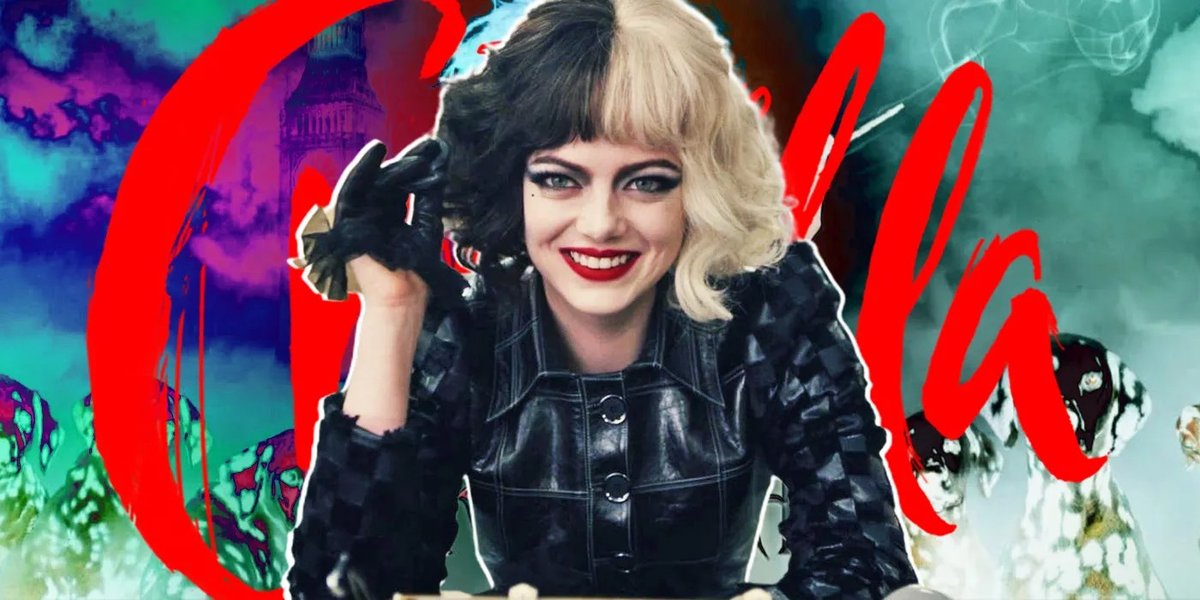
The world loves a good villain, but few capture our imagination quite like Cruella de Vil. Her name alone conjures images of theatrical flair, ruthless ambition, and a chilling obsession with canine couture. But beyond the iconic black-and-white hair and dramatic pronouncements, what truly drives this notorious character? Delving into The Psychology and Motivations of Cruella reveals a fascinating tapestry of trauma, ambition, and a fierce, unyielding desire for self-expression.
Before we unravel the intricate threads of Cruella's mind, here's a quick look at what we'll explore:
At a Glance: Understanding Cruella's Inner World
- Trauma as a Catalyst: Early life events, particularly the loss of her mother, profoundly shaped her dual identity.
- The Power of "Want": Her primary motivation, according to psychological analysis, is a powerful "want" driven by anger and a need to fulfill goals.
- Fashion as a Weapon: Her artistic genius is not just a passion, but a tool for rebellion, recognition, and revenge.
- A Question of Psychopathy: While exhibiting manipulative and narcissistic traits, she also shows capacity for loyalty and emotional depth, complicating a simple diagnosis.
- Identity Reclamation: Her journey is a battle to shed the suppressed "Estella" and fully embrace the uninhibited "Cruella."
- Revenge and Justice: A deep-seated desire to settle scores, particularly against the Baroness, fuels many of her actions.
More Than Just a Villain: Unpacking Cruella's Persona
For decades, Cruella de Vil was largely understood as a one-dimensional antagonist – a wealthy, eccentric woman obsessed with turning adorable puppies into fur coats. The 2021 film Cruella, however, peeled back the layers, offering an origin story that transformed her from a caricature into a complex, almost sympathetic figure. This film isn't just a prequel; it's a deep dive into the psychological crucible that forged her.
We meet Estella, a young girl with an undeniable creative spark, a mischievous streak, and a fierce independence. From the outset, she's an outsider, struggling to fit into a conventional world that seeks to tame her wild spirit. This internal conflict, the battle between "Estella" – the good-hearted, aspiring fashion designer – and "Cruella" – the dark, rebellious, unapologetically ambitious alter ego – is central to her psychological makeup. It's a vivid depiction of how suppressed desires and traumatic experiences can fester, eventually erupting into a dominant, albeit destructive, persona.
The Genesis of Cruella: Early Life and Trauma
Cruella's story truly begins with Estella's childhood. Orphaned after a tragic accident that she blames herself for, Estella navigates a harsh world, finding solace and purpose in her burgeoning fashion talent and the makeshift family she creates with Jasper and Horace. But the shadow of her past, particularly the perceived loss of her mother at her own hand, hangs heavy. This deep-seated guilt and grief act as a powerful undercurrent, shaping her worldview and fuelling her later transformation.
Psychologically, early trauma and experiences of being an outcast often lead to the development of coping mechanisms. For Estella, this meant suppressing her darker, more rebellious side – the "Cruella" that emerged when she felt threatened or wronged. Her mother's final advice to "be a bit bad" and the subsequent events created a fertile ground for this suppressed alter ego to grow, waiting for the right catalyst to fully emerge. She yearned for acceptance but simultaneously rejected conformity, a classic internal struggle that defines many complex characters.
Driven by "Want": Bernhardt's Theory in Action
A crucial insight into Cruella's psychology comes from a study by researchers analyzing her character in the film. This study, drawing on Bernhardt's (1953) theory of Human Motivation, concluded that "The Aspect of want dominates the main character in the Cruella movie because of the conflicts and incidents experienced by the main character as the emotional side of the main character makes her want everything that can relieve her anger and fulfill her goals." This is a profound statement that underpins nearly all of Cruella's actions.
What does this "want" truly entail for Cruella?
- Wanting Recognition: Estella, as a talented but undervalued designer, constantly craves acknowledgment for her artistic genius. When she sees her ideas stolen or her talent dismissed, this want manifests as frustration and a desire to prove her superiority.
- Wanting Revenge: Once the true circumstances of her mother's death are revealed, her "want" shifts dramatically towards retribution against the Baroness. This isn't just a simple desire for payback; it's a deep-seated need to right a profound wrong, to reclaim a life and legacy that was stolen from her.
- Wanting Identity: Perhaps most importantly, Cruella "wants" to be herself, free from the constraints of Estella's "good girl" facade. This desire for authentic self-expression, no matter how unconventional or shocking, becomes an overwhelming force. She wants to shed the skin of her past trauma and fully inhabit the powerful, uninhibited persona she creates. This "want" for self-fulfillment is fueled by her anger at being stifled and a burning ambition to achieve her goals on her own terms.
This drive, this pervasive "want," means Cruella isn't merely reacting; she's actively pursuing a vision, albeit one increasingly shaped by her darker impulses. Every elaborate scheme, every daring fashion stunt, is a step towards relieving her anger and fulfilling these intertwined goals.
The Allure of Aesthetics and Power: Her Creative Obsession
Cruella's world is a canvas, and fashion is her ultimate medium. But for her, clothes are far more than mere garments; they are a language, a weapon, and a shield. Her creative obsession isn't just about beauty; it's deeply intertwined with her psychological needs.
- Fashion as Expression: It's how she communicates, rebels, and makes her mark. When Estella first glimpses the extravagant world of fashion, she sees a path to liberation. Her designs are audacious, provocative, and impossible to ignore. This artistic outlet allows her to externalize the internal chaos and brilliance that defines her.
- Fashion as a Weapon: Against the Baroness, her fashion creations become instruments of psychological warfare. Each outfit is a statement, a challenge, a deliberate act of upstaging and undermining her rival. The "garbage dress," the "car dress," the dramatic reveal at the ball – these aren't just aesthetic choices; they are calculated moves designed to provoke, disorient, and assert dominance.
- The Need for Control and Recognition: In a world where she felt powerless as Estella, Cruella seizes control through her art. She dictates trends, commands attention, and manipulates perception through her designs. Her rivalry with the Baroness isn't just about family secrets; it's a clash of creative titans, a battle for the soul of the fashion world, and Cruella is determined to be the victor. This desire for control extends beyond her craft to her destiny, ensuring no one dictates her narrative again.
Is Cruella a Psychopath? A Closer Look
A common question that arises when analyzing characters like Cruella is whether they fit the clinical definition of a psychopath or sociopath. While Cruella certainly exhibits traits that might lead one to believe this – her manipulative nature, lack of empathy towards certain individuals (especially the Baroness), her grandiosity, and her calculated cruelty – a closer look reveals a more nuanced psychological profile.
Psychopathy is typically characterized by a pervasive pattern of disregard for and violation of the rights of others, often accompanied by a lack of remorse, superficial charm, and an inability to form genuine emotional attachments. While Cruella is manipulative and can be ruthless, several factors complicate a straightforward diagnosis:
- Capacity for Loyalty and Affection: Cruella genuinely cares for Jasper and Horace. They are her chosen family, her steadfast companions, and she demonstrates affection, concern, and even vulnerability with them. This capacity for attachment, however limited, is often absent in true psychopaths.
- Emotional Depth and Reaction: She experiences profound grief over her perceived mother's death, fierce anger at the Baroness's betrayal, and moments of genuine joy in her creative triumphs. While she learns to channel these emotions, they are undeniably present and drive her actions, differentiating her from a cold, emotionally flat psychopath.
- Motivation for Cruelty: Her cruelty, particularly towards the Baroness, is largely reactive and goal-oriented. It stems from a desire for revenge and justice (in her distorted view), not from an inherent, pleasure-seeking disregard for suffering. She isn't inflicting pain for the sake of it but as a means to an end. Her actions are often calculated, aimed at achieving specific outcomes like public humiliation or tactical advantage, rather than impulsive, senseless violence.
- Narcissistic Traits vs. Psychopathy: Cruella displays clear narcissistic traits: a grandiose sense of self, a need for admiration, and a lack of empathy for those who obstruct her. However, narcissism, while sharing some overlaps, is distinct from psychopathy. Her inflated ego and sense of self-importance are deeply tied to her artistic genius and her need to escape a past where she felt insignificant.
Therefore, while she embodies many "villainous" characteristics, labeling her a pure psychopath might be an oversimplification. Her psychology is more likely a complex interplay of trauma, reactive narcissism, and a powerful, almost insatiable, drive for self-actualization and retribution.
The Motivations Unveiled: A Web of Desires
Cruella's motivations are not singular but a tightly woven tapestry of interconnected desires, each fueling the others and propelling her narrative forward.
Revenge
This is, perhaps, her most palpable motivation once the truth about her parentage and her mother's death comes to light. The Baroness isn't just a rival; she's the architect of Cruella's greatest trauma. The elaborate schemes, the public humiliations, the meticulously planned downfall – all are orchestrated with a singular focus on exacting revenge for the wrongs inflicted upon her and her true mother. It's a desire so potent it transforms Estella into the uncompromising Cruella.
Identity and Autonomy
Throughout her life, Estella felt stifled, forced to conform, to mute her wilder impulses. The emergence of Cruella is a powerful reclamation of self. It's about shedding the persona society expected of her and embracing her authentic, albeit chaotic, identity. This motivation is deeply tied to her desire for autonomy – the right to live, create, and be on her own terms, free from anyone's control, especially the Baroness's.
Recognition and Validation
As a supremely talented but often overlooked designer, Estella yearned for her work to be seen and appreciated. Cruella takes this desire to an extreme, demanding not just recognition but adoration, even fear. Her dramatic fashion shows and public stunts are designed to shock, awe, and cement her status as an undeniable force in the fashion world, eclipsing anyone who dares to challenge her, including her former mentor.
Belonging (Paradoxically)
Despite her outward display of fierce independence, Cruella still seeks a form of belonging. She surrounds herself with Jasper and Horace, creating her own unconventional "family." This chosen family provides a sense of loyalty and acceptance that she craws, contrasting sharply with the cold, calculating world of the elite fashion scene. Her journey, in a twisted way, is also about finding her place in the world, even if that place is at the top of the villainous heap.
Justice (in Her Twisted View)
For Cruella, her actions are often about righting wrongs. She sees herself not just as an avenger but as a dispenser of justice against those who have harmed her or those she cares about. The Baroness, in her eyes, deserves every ounce of Cruella's wrath for her cruelty, arrogance, and the murder she committed. Cruella becomes a vigilante of sorts, operating outside the conventional bounds of law and morality to settle a score she believes is entirely justified.
From Estella to Cruella: The Evolution of a Persona
The transformation from Estella to Cruella is the narrative's psychological core. It's not a sudden switch but a gradual, agonizing evolution, accelerated by profound revelations and escalating conflict.
Initially, Estella tries to suppress Cruella, seeing her as a hindrance, a problematic side that gets her into trouble. But as she faces repeated injustices, manipulation, and ultimately, the devastating truth about her mother, the need for Cruella becomes undeniable. Cruella represents strength, defiance, and the uninhibited power to fight back.
This psychological shift can be seen as:
- Suppression: Estella tries to be "good," to fit in, to make her way without her wilder side.
- Emergence: Under pressure, Cruella begins to surface as a protective mechanism, a way to cope with adversity.
- Acceptance: With the revelation of the Baroness's crimes, Estella realizes that being "good" is ineffective. Cruella is not just a part of her; Cruella is what she needs to be to survive and achieve her goals.
- Integration/Dominance: By the end, Cruella doesn't just emerge; she consumes Estella. The dual identity resolves with Cruella as the dominant, fully embraced persona, a deliberate choice rather than a mere outburst. She realizes that Estella was the "mask" she wore for a world that wouldn't accept her true self, and Cruella is her true, unapologetic form.
This journey highlights how trauma, when left unaddressed, can lead to the fragmentation of identity, and how, for some, reclaiming power might involve embracing the darker aspects of their psyche.
The Double-Edged Scarf: The Consequences of Cruella's Psychology
Cruella's complex psychology and motivations lead to actions with far-reaching consequences, both liberating and destructive.
On one hand, her transformation unleashes incredible creative power. She becomes a fashion icon, a revolutionary force who challenges the status quo and proves that art can be subversive and powerful. She finds her authentic voice and, in a strange way, achieves a form of self-actualization by fully embracing who she truly is. This is the positive side of her psychological liberation.
On the other hand, her methods are often morally dubious. She manipulates, lies, and inflicts emotional and psychological pain on others. While her primary targets are those she deems deserving of her wrath (the Baroness), her ambition can overshadow the feelings of even those closest to her, like Jasper and Horace. Her relentless pursuit of her "wants" comes at a significant cost, leading her down a path of increasing isolation and a disregard for conventional morality. Her genius is undeniable, but it's often tainted by the collateral damage of her unchecked ambition.
Understanding the Villain: Why Cruella Resonates
Cruella de Vil, especially in her origin story, resonates so deeply with audiences precisely because her psychology is so layered. She's not just evil; she's a product of her environment, her trauma, and her extraordinary talent. We see her vulnerability, her moments of struggle, and her genuine desires, even if her methods become increasingly questionable.
Her story taps into universal themes: the struggle for identity, the desire for recognition, the pain of rejection, and the intoxicating allure of revenge. While we might not condone her actions, we can understand the underlying pain and motivation that drives her. She embodies the dark side of ambition and the consequences of trauma, making her a compelling, albeit dangerous, figure.
Ultimately, Cruella's psychology offers a fascinating case study in how a villain is made, not born. It shows how the human mind, pushed to its limits by tragedy and injustice, can forge a persona capable of both incredible creativity and chilling ruthlessness.
Beyond the Fur Coat: Your Takeaway on Cruella's Mind
Peeling back the layers of Cruella de Vil's character reveals a fascinating psychological landscape. She is a woman driven by a powerful "want" for recognition, revenge, and ultimately, self-liberation, all stemming from deep-seated trauma and a fierce artistic spirit. While her methods are extreme and her empathy selective, her motivations are deeply human, making her a villain who is both terrifying and tragically compelling.
Understanding Cruella's journey isn't just about analyzing a fictional character; it's an exercise in appreciating the complexity of human motivation, how past wounds can shape future actions, and the intricate dance between our darker impulses and our innate desire for self-expression. Her story challenges us to look beyond the surface, to question what truly drives a person, and to acknowledge that even the most iconic villains have a psychology worth exploring. For those eager to dive deeper into the iconic character's entire story, including her infamous obsession, you can find All about Cruella and Dalmatians.